
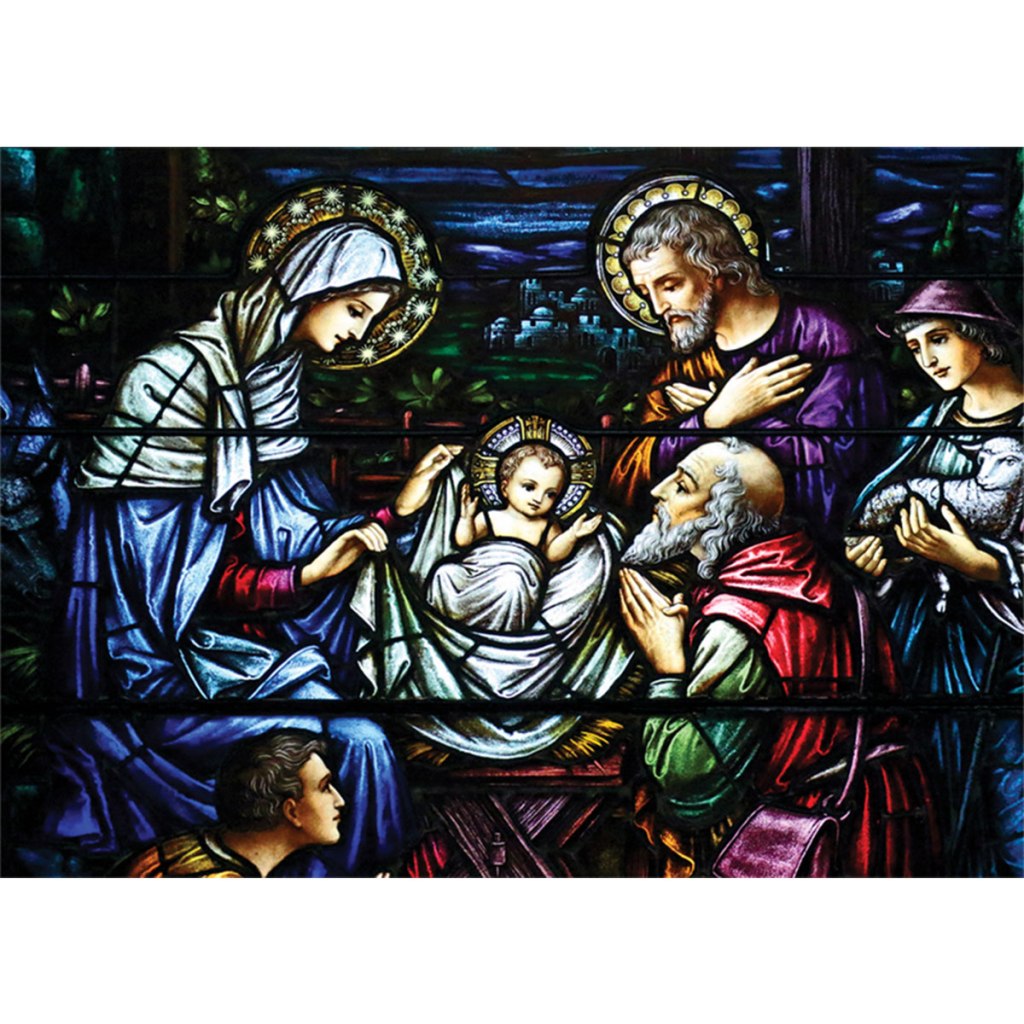
A little over 2000 years ago, the near east, and Judaea in particular, was in a state of nervous agitation. For some thirty years by this point, Herod the Great, an Edomite who had been appointed as King of the Jews by the Roman Senate, had ruled with great brutality, his reign bringing to an end a hundred years of Hasmonean, i.e. Maccabean rule, which had, for a brief time at least, achieved Jewish independence for the first time since the destruction of Jerusalem by Babylon over 500 years earlier. It was in the wake of this renewed subjugation to foreign power in the form of this puppet king, a subjugation the crowning indignity of which even saw the Roman general Pompey the Great enter into the Holy of Holies, and in the aftermath of a series of civil wars, that Herod had, with Roman backing, achieved in his little client kingdom a sort of murderous peace.
And yet, there was still after thirty years this sense of agitation. In the desert devout men waited for the coming of a new high priest and a new Davidic king, who would renew Temple worship as well as the kingdom. At the same, they, along with many others, read with expectation the prophecies of Daniel, who had foretold seventy weeks of years until the coming of a messiah, and of a coming kingdom, not made by human hands, which would put an end to all other kingdoms and endure forever. So too, the people remembered the many promises that God had made to Israel, the many promises to the house of David, and so they waited with eager expectation for they-knew-not-quite-what, but certainly for God to again visit his people.
Of course, this expectation was not so eager for all parties. The Romans sneered at such Jewish superstition, while the Sadducees and the rulers, Herod chief among them, rather enjoyed the status quo that had brought them wealth, power, and prestige.
And so it is into this rather tense setting, with the threat of violence ever lurking in the background, that wise men from Persia arrived in Jerusalem asking Where is he who has been born king of the Jews? For we have seen his star in the east. It is little wonder that when Herod heard this, he was troubled, and all Jerusalem with him. For in the coming of these foreigners, and in what they had seen that had drawn them westwards, Herod, together with the chief priests and the scribes of the people, would have recalled those ancient words of Balaam: I see him, but not now; I behold him, but not near – a star shall come out of Jacob, and a scepter shall rise out of Israel; it shall crush the borderlands of Moab, and the territory of all the Shethites. Edom with become a possession, Seir a possession of its enemies, while Israel does valiantly.
To Herod, then, the news of this newborn king and his star was, at best, a dangerous superstition and, at worst, a threat to his rule (for remember, Herod was an Edomite). For the powers that be, it certainly offered nothing to their advantage, and so even if the appearance of a newborn king in David’s city was a spark of hope for the people and a dawning light for the gentiles, bringing with it the tantalizing possibility that God had again looked with compassion upon Israel, such a hope was, to Herod and his Roman masters, a myth and a superstition to be violently contained, hence Herod’s typical brutality in his massacre of the Holy Innocents.
But the truth of what had happened in Bethlehem was far greater than the power of Herod to contain, and far more wonderful than any myth or superstition. Because God, after all, had made promises to Israel. He had promised that the sons of Jacob would be a light to the nations, that the kingship of David would never fail, that the exile would be ended. Against these promises of the Most High, of what use were the swords of a petty king like Herod, or even a great empire such as Rome?
But in the birth of the Christ, God does not merely fulfill these promises, as wonderful as that would have been, but he fulfills them in a way that even the wisest scholar of the law could not have foreseen. For it is not merely that this anointed child is another man like David his father, chosen from among the people for a great purpose, but rather this child is God himself, the unbegotten Son, consubstantial with the Father, having assumed to himself a human nature so that now human nature, in his divine personage, is inserted into the very life of the Godhead, setting the stage for our own entry into divine life, which is to say our salvation and redemption.
Now on this point we must be careful, lest the failure of our imaginations prevent us from appreciating just how truly radical this is. For God is not a god, the way that the gods of Greek and Roman myth were conceived, that is as very powerful creatures, yet creatures nonetheless, limited and fallible. God, in other words, is not a being that exists alongside other beings, but is rather the ground of being itself, simple, immutable, fully actual. He is, to use a metaphor, not another character in the story, as are angels and human beings and rocks and trees, but God is rather the author himself. And so in the Incarnation, what we have is not a god coming down from the sky to dwell in a manger, but rather the author of the story of the cosmos, without himself undergoing any change, is writing himself into that story through the flesh that he assumes from the Blessed Virgin.
Herod and the Romans, as well as the scribes and the priests and all who would oppose this newborn king, thus found themselves, though they do not recognize it, in the impossible situation of opposing the One who was closer to them they were even to themselves, the One who at each and every moment sustained them in being even as they sought his life. And so it is no wonder that they failed, that the Holy Family escaped to Egypt, and it is no wonder that the good news of the newborn king has with great rejoicing spread down through the centuries to every corner of the earth, while Jerusalem and its temple were long ago destroyed, and Rome and her gods long ago forgotten, as Mosaic prefigurement passed over into Christic reality, and as pagan myth and superstition faded like a mist with the coming of the day.
All this to say, it is that night twenty centuries ago that is the pivot point of history, that moment, when Christ was born in a stable, that marks the coming of the dawn as the life and truth of the world were revealed, as angels and shepherds and magi rejoiced, and the darkness of death and superstition were put to flight, as they still are in flight!
And for us, that is no small consolation! For this feast is not just a mere historical commemoration, as if we had no longer to contend with error and superstition, as if we didn’t need a savior, for we too are afflicted with dangerous myths! How often have you heard that atheistic myth, for instance, or perhaps you have even thought it yourself, that we are just cosmic accidents on an insignificant spec of rock hurtling through the vacuum of an infinite space with no purpose? Or else the myth that happiness lies in doing whatever one pleases (good being relative), or, and this is especially topical given the danger to our experience of Christmas posed by American culture, the myth that our purpose as human beings is to be found in what we can consume and in what material things we can possess.
The joy of Christmas is that it liberates us from these errors and from all such errors, revealing to us the true and certain hope of something far better than we ever could have conceived. For how will you say that a human being is but an insignificant spec and that life is meaningless when the author of the world, in whose eyes even the vastness of the cosmos is but a little thing, has himself condescended to the smallness of a newborn babe? Or how will you seek happiness in following the capriciousness of your own will, or in accumulating merely created things, when through the Incarnation God is offering us a share in his very life?
The joy of Christmas, that is to say, is Jesus Christ. “The truth is that only in the mystery of the Incarnate Word does the mystery of man take on light, as Christ fully reveals man to man himself and makes his supreme calling clear, as in him all truths find their root and attain their crown,” to quote the Second Vatican Council. He is the antidote to every poisonous lie, the fulfillment of every human desire, the answer to every prayer: Jesus Christ, true God and true man, born this (night/day) of the Virgin in Bethlehem of Judah.
 PaddlingPadre
Leave a comment